

Origin and name
The square sits on the coastal flat of the bay, facing Muelle Prat, and took shape as the main civic space of the port. In the late 19th century it adopted the name of Rafael Sotomayor Baeza, Minister of War and Navy during the War of the Pacific, tying the place to the country's naval memory.
The end opposite the sea is presided over by the former Intendencia, today the headquarters of the Armada de Chile. The building, designed by Ernesto Urquieta, was completed in 1910 and closes the square with its monumental façade.
The Monumento a los Héroes de Iquique
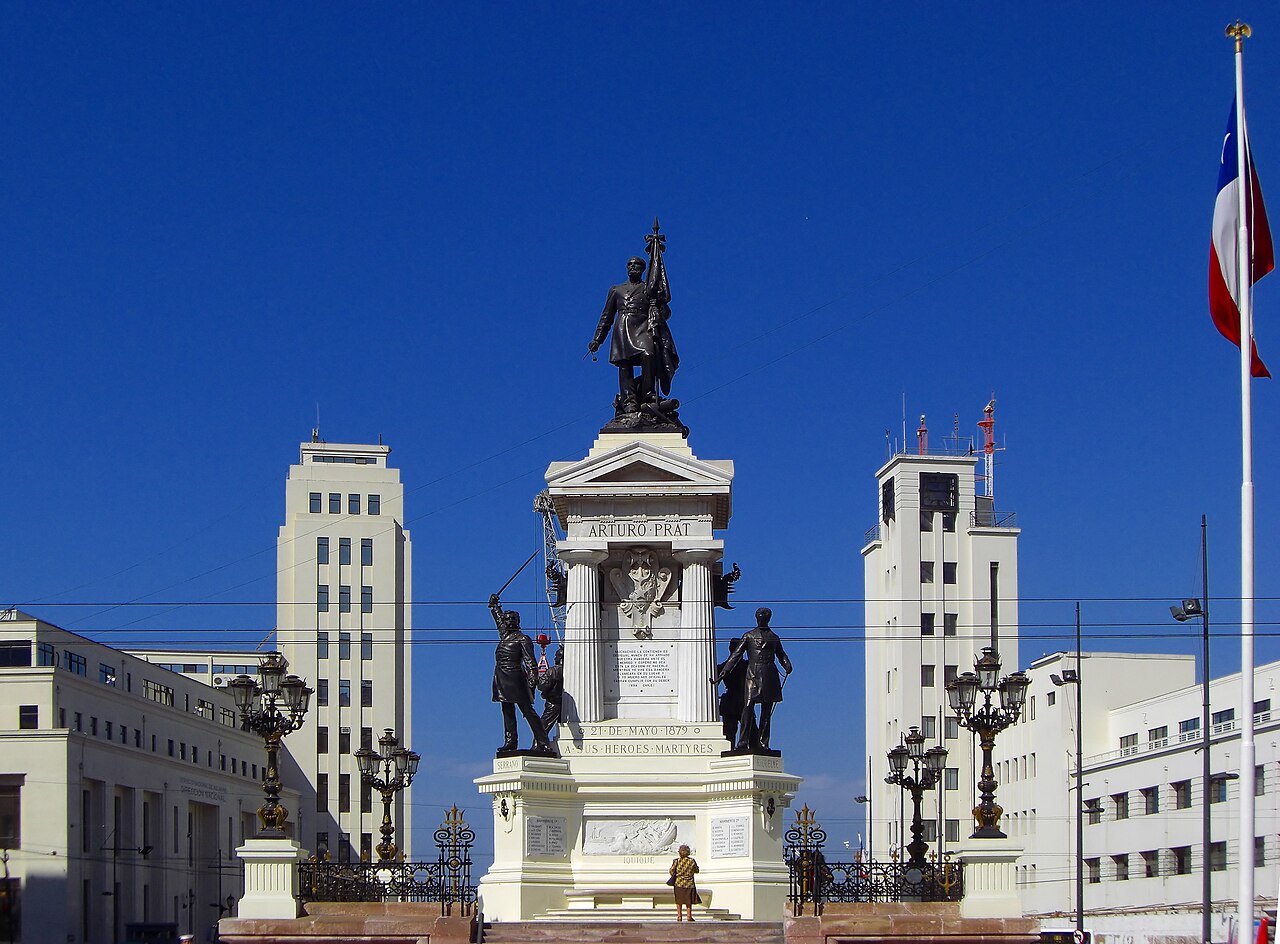
Diego Delso, delso.photo · CC BY-SA 3.0 · 2007-01-03.Denoising: Taxiarchos228. Display resized and cropped.
In 1886 the Monumento a los Héroes de Iquique was inaugurated at the center of the plaza, erected to honor the sailors who fell in the naval battles of Iquique and Punta Gruesa. Over the years it became the most recognizable urban landmark of Valparaíso and a site of institutional ceremonies. A crypt linked to that memory lies beneath the ensemble.
Chile Travel places “1879” beside the monument name; the National Monuments Council dates its erection to 1886. This guide uses 1886 for the monument rather than treating the tourism page’s parenthesis as its inauguration date. CMN · Chile Travel
Heritage recognition
In 1979 Plaza Sotomayor was declared a Zona Típica (Heritage Zone) together with the buildings that enclose it, later extending its protected area toward the pier. In 2003, the historic port area of Valparaíso entered the UNESCO World Heritage List, and the plaza is part of that ensemble.
Between the monument, the former Intendencia and Muelle Prat, the plaza sums up the city's identity: maritime memory, monumental architecture, transport and daily life facing the bay.
Frequently asked questions
Who was Rafael Sotomayor and why is the square named after him?
Rafael Sotomayor Baeza was Chile's Minister of War and Navy during the War of the Pacific. The square took his name in the late 19th century as a tribute to his work and to the space's link with the country's naval memory.
What does the Monumento a los Héroes de Iquique commemorate?
Inaugurated in 1886, the monument honors the sailors who fell in the naval battles of Iquique and Punta Gruesa. A commemorative crypt lies beneath the ensemble, and the landmark is used for civic and naval ceremonies in Valparaíso.
Why is Plaza Sotomayor part of the UNESCO World Heritage List?
In 2003 the historic port area of Valparaíso was inscribed on the World Heritage List. The plaza, Barrio Puerto and the buildings that enclose it form part of that protected heritage ensemble.
Why is Valparaíso a UNESCO World Heritage Site?
In 2003 UNESCO inscribed the historic port area of Valparaíso on the World Heritage List for its outstanding urban value: a hillside port with streets, funiculars and architecture that show how the city adapted to the terrain. Plaza Sotomayor and Barrio Puerto are part of that protected ensemble facing the bay.
When was Plaza Sotomayor declared a Zona Típica (Heritage Zone)?
Plaza Sotomayor was declared a Zona Típica in 1979, together with the buildings that enclose it, such as the former Intendencia. Its protected area was later extended toward the pier, reinforcing protection of its heritage profile on the port plan.
Sources
Sources and references
This guide cross-checks its information with heritage, tourism and institutional sources. Commercial details, fares and opening hours may change: confirm them before your visit.
- Municipalidad de Valparaíso — obras anunciadas ↗
- Consejo de Monumentos Nacionales — Plaza Sotomayor ↗
- Consejo de Monumentos Nacionales — Edificio de la Intendencia ↗
- Chile Travel — Portal oficial de turismo de Chile ↗
- Armada de Chile — Ruta Patrimonial Naval ↗
- Google Maps — Ficha del lugar ↗
- Wikimedia Commons — Fotografía con licencia abierta ↗
Content checked on 29 October 2026.


